2021 m. gegužės 20 d., ketvirtadienis

Have just received PCBs for the UPDI programmer

 I have just received PCBs for a "HighVolgage" (12V) UPDI programmer featured here:


I have some spare pieces so if you need one please secure it until the stock lasts as I am not planning to get more. You can click-purchase (9,99 EUR + 4 EUR shipping) here :

2021 m. gegužės 7 d., penktadienis

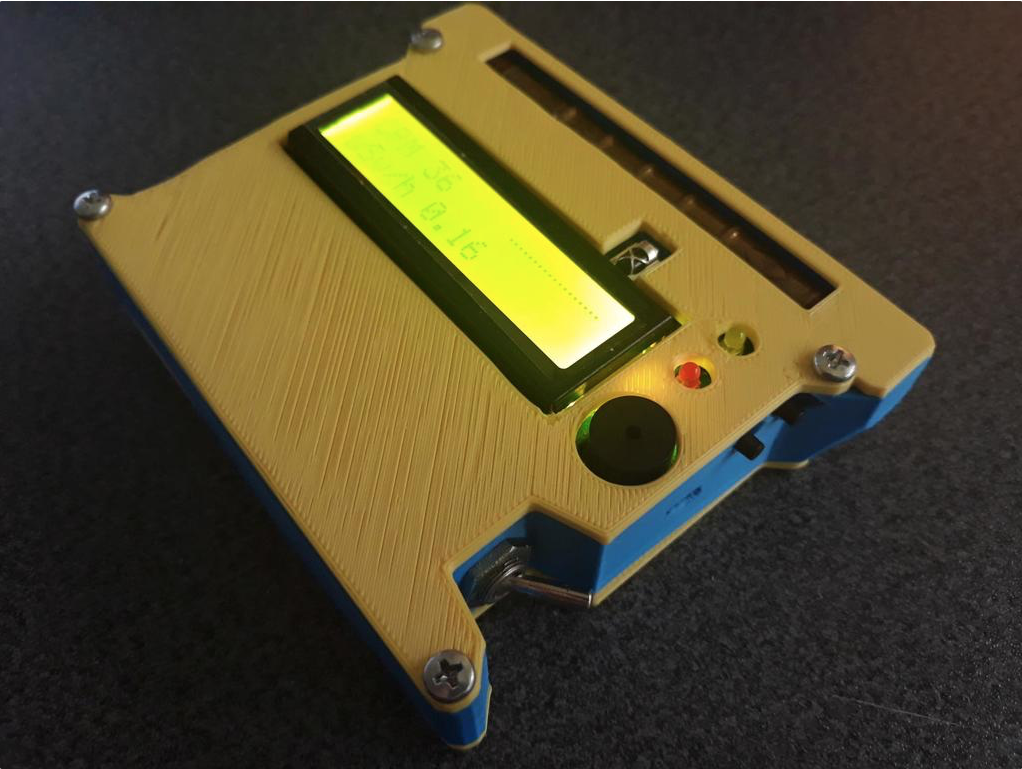
Here is a new enclosure design for the counter electronics with the SBM-20 tube for 3D printing by Marius

 Here is a nice new design of the enclosure for 3D printing by Marius.  It is made in OpenScad so easily modifiable.

Many thanks Marius,  for sharing!


OpenScad and .stl files can be downloaded from this link  or from Thingiverse

For complete visualisation below are pictures of the make cortesy of Sergiu from Romania.


A desing of the enclosure for the geiger counter with a large SBM-19 (STS-6) tube by Marc for 3D printing

 Here is a new design of the enclosure for the geiger counter with a huge SBM-19 (STS-6) tube.

Might probabl be also used with Si22G tube.

Thank you Marc!


Files for 3D printinb can be downloaded form this link or Thingiverse


2018 m. lapkričio 8 d., ketvirtadienis

A nice "post-apocalyptic" decal for a factory-made-ABS-enclosure by courtesy of Marc from Canada

Here for your viewing pleasure is a nice "post-apocalyptic" decal for a factory-made-ABS-enclosure by courtesy of Marc from Canada.


                                                         By the kind permission of Marc,

                   "...I've also attached the JPG of the decal if someone should want to use it. I
                   simply printed to glossy sticker paper to print it and cut it out with a blade. ..."

                                        decal artwork for your own use can be downloaded here


                                 If you need the enclosure you can get it through this post here

                                                                 or on eBay here

2018 m. liepos 10 d., antradienis

Here's a nice reuse of the geiger housing from Y1962 by Craig from Canada!


this is an project by Craig from Canada, who has installed the SMD version of electronics into the enclosure from year 1962

uses SI-8B tube


2018 m. balandžio 25 d., trečiadienis

New modification of the bottom for SI-8B (СИ-8Б) tubes of the factory made quality ABS plastic enclosure for SMD based kits

The written below concerns enclosures described in this post:

Nuclear Radiation Survey Meter in the factory made quality ABS plastic enclosure for SMD based kits (the direct purchase link inside)


Now instead only an opening for SI-8B (СИ-8Б) tube and the internal mounting bracket there is an external frame, which holds the protective net and accepts the original beta shield of the SI-8B tube.


2018 m. sausio 26 d., penktadienis

A variation of the v.11.0.2 software (hence v.11.0.2p ) which in addition provides 20μS pulses on the Arduino D19 pin (better known as A5 or SCL) when the detector event is obtained by the micro-controller's interrupt pin from the detector (for forwarding to other micro-controller electronics )


Here below are links to the variation of the v.11.0.2 software which in addition provides 20μS pulses on the Arduino D19 pin (better known as A5 or SCL) when the detector event is obtained by the micro-controller's interrupt pin from the detector (for forwarding to other micro-controller electronics )

This is not a new version but rather a sideways customisation requested by a user, who wanted to connect Raspbery Pi to the geiger counter to use geiger data for random number generation.


Here are a few videos. The first one below is visually explaining the added function. Here the pulse width was intentionally made 10mS wide so that LED flashes are visible (note! in the software linked below the pulse is nearly 500 times shorter so if LED is connected flashes will not be visible)


(here where the resistor is connected is the ground pin, and the other is the signal pin)
(some LED flashes can be missed because of non-synch with the smartphone camera while filming)


in this next video, there is an oscilloscope screen showing the actual output pulse


(for those who use other development environments or want to upload with the XLoader, utility here is a compiled hex file with preset for the NEC iR remote protocol


Arduino libraries are here (don't forget to add them to you Arduino IDE libraries):

note 1:

The new board is driven by a 10MHz crystal. Please add a new board to your Arduino IDE.
Instructions how to add this board to your Arduino IDE using the Boards Manager  can be found here: https://github.com/impexeris/Arduino-Geiger-PCB/wiki


You can buy the new SMD based Geiger counter electronics on eBay here:

http://www.ebay.com/sch/impexeris/m.html?_nkw=&_armrs=1&_ipg=&_from=

note 2: the pulse can occasionally get a longer  (i.e.35μS) if detector signal interrupt coincides with the generation of the pulse (as latter is short and generated by simple bit-bang process). This is still reasonably short as original pulses from detector are from 100 to 190μS wide due to properties of Geiger-Müllert tubes themselves. With such assumption and for convenience reason (so that existing header is used - such simple pulse generation technique was preferred to the more exact one)

note 3: due to short pulse time it is recommended to make connections using a shielded cable.
For example the microphone cable by running signal through the internal thread and connecting grounds through the shield.